The Small Business Website Guide: From Zero to Live, Step by Step

Why does your small business need a website?
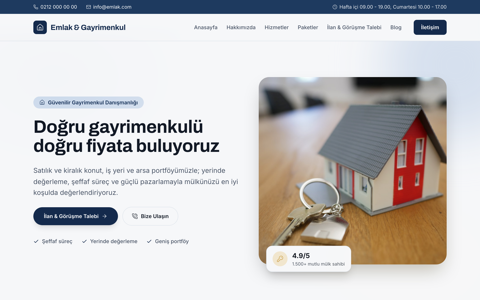
When people look for a service today, the first thing most of them do is search on Google. Whether you're a therapist, dietitian, lawyer, plumber, or beautician, if a potential customer can't find you online, they'll likely choose a competitor they can find. A social media account matters, but it's rented space; your website is a digital storefront that you fully own and control.
A good website does far more than make you "exist" online. It builds trust, answers common questions around the clock, automates appointment and quote requests, and brings you a steady flow of visitors from search engines without locking you into a constant ad budget. In short, it's an asset that wins you customers even while you sleep.
Which pages should you have?
You don't need a complicated structure; for a small business, a handful of strong pages is more than enough. The essentials are: a Home page with a clear promise, a Services page that explains exactly what you offer, an About page that introduces the people behind the business, a Contact page with phone, address, map, and form, and a Testimonials section that builds confidence.
Depending on your industry, you can add a Blog (great for SEO and showing expertise), an FAQ, and an online Booking page. The golden rule: on every page, the visitor should be able to answer the question "what should I do next?" Each page needs a clear call to action — call, fill out a form, or book an appointment.
How to prepare your content
Content is the part of your site that actually sells. Speak your customer's language: instead of saying "20 years of experience," explain how you'll solve their problem. Keep the text short, warm, and readable; use headings, lists, and clear sentences rather than long paragraphs. Writing a separate description for each service brings clarity to both your visitors and to Google.
Visuals matter just as much as words. High-quality photos of your real workplace, your team, and your actual work build far more trust than stock images. Adding customer reviews, certifications, and before-and-after examples helps convince visitors who are still making up their minds.
SEO and getting found
Even the most beautiful site is useless if no one can find it. Start with the basics of SEO: write a clear title and description for every page, and naturally weave in your service names and your city or district (like "dietitian in Kadıköy"). Setting up a Google Business Profile is the fastest way to show up in local searches.
A fast-loading, mobile-friendly, regularly updated site directly affects your ranking. A consistently maintained blog proves your expertise and opens new doors in search. SEO is not a one-time task; it's an investment that grows over time.
Steps to take your site live
Keep the process simple. First, clarify your goal (do you want bookings, quotes, or phone calls?), then register your domain, pick a theme or template, prepare your pages and content, connect your contact form and booking system, test the mobile view, and publish along with your privacy and consent pages. The work doesn't end at launch: watch how visitors behave, fix what's missing, and keep your content fresh.
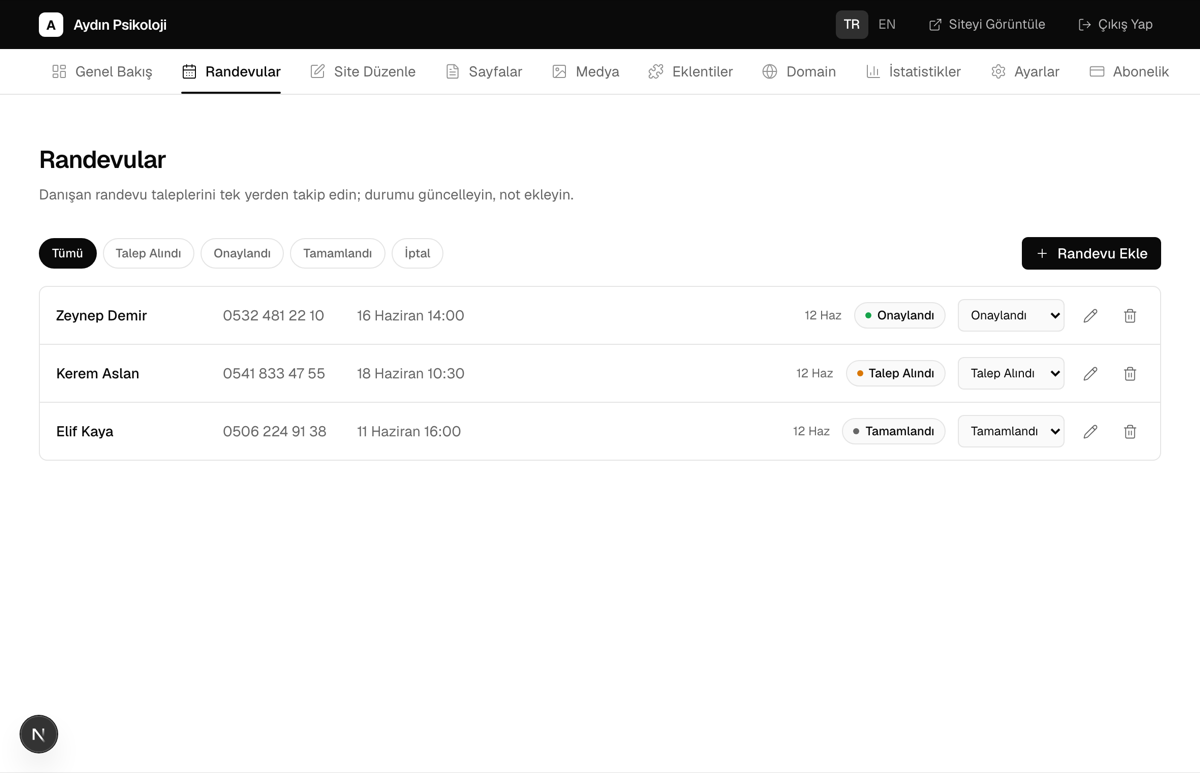
The good news is you can now do all of this without writing any code and without a process that drags on for weeks. Regnos brings every one of these steps into a single dashboard, with industry-ready themes, a drag-and-drop editor, a comprehensive SEO module, and privacy-compliant infrastructure. You can try it free for 2 days, start without entering any credit card details, and have your site live the same day.
Don't just read it, launch it
Apply everything in these guides from one dashboard and get your site live in minutes.